


In this article, you will learn some of the nasty habits to avoid to protect your teeth from tooth decay and discoloration. Learn what causes teeth grinding, the best ways to keep your teeth white, and how to avoid cavities by making simple, effective changes to your daily habits.
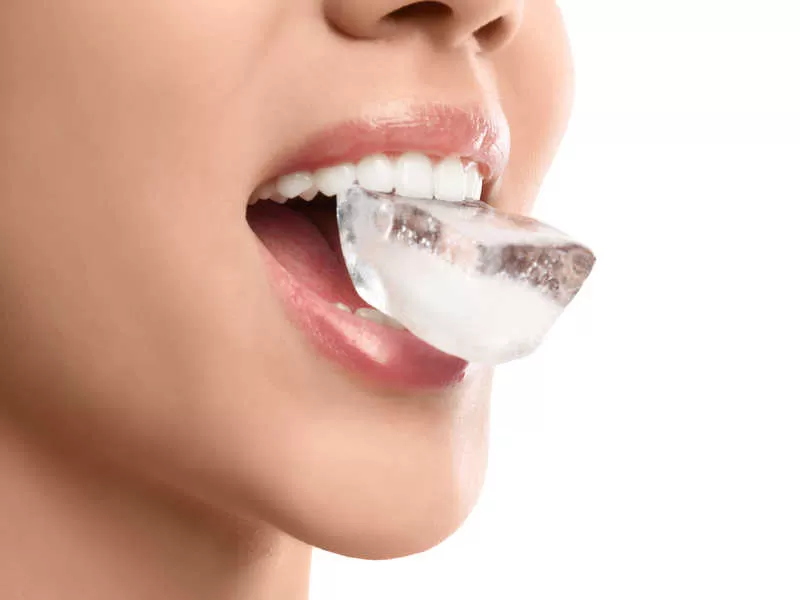
Chewing ice is a seemingly harmless, often unconscious habit. But ice chewing can cause permanent damage to our teeth, putting small cracks in the enamel.
These cracks can grow larger over time and ultimately cause a tooth to fracture, requiring a visit to the dentist and unnecessary expense to get the cracks fixed. If you find yourself chewing ice as a habit, try opting for chilled water instead, or order your drinks without ice to resist the harmful urge to chew those cubes.
You wouldn\’t play football without a helmet, would you? Why play a sport without a mouth guard then? Going out on the playing field without something to protect your teeth is as important as wearing a helmet and other protective body gear.
Believe it or not, an estimated 5 million teeth are knocked out every year through sports. According to the American Dental Association, mouth guards prevent 200,000 sports-related mouth injuries every year. Those who lose teeth from rough play probably wish they had put their mouth guards in first. Wouldn\’t you?
Your teeth are vulnerable to being knocked out or damaged from high impact sports such as
In fact the Academy for Sports Dentistry recommends mouth guards for more than 40 different sports. A sports mouth guard helps cushion hard blows to the teeth and jaw. It has the added health benefit of protecting the soft tissues of your
from being sliced by your teeth. Not only that, some believe it may offer a little shock absorption to protect you from a concussion as well.
When it comes to mouth guards, you have four choices based on level of protection.

Tired parents might be tempted to do anything to get their restless babies to sleep. Although it is tempting, avoid sending your bouncing bundle of joy to bed with a bottle in his or her mouth. That\’s because of a condition called baby bottle tooth decay.
Bottles of milk at bedtime increase the risk of early dental decay in baby\’s mouth. Prolonged exposure of the sugar in milk works with mouth bacteria to break down tooth enamel and results in rampant decay.
Here are some tips to help you protect your baby\’s teeth to ensure a healthy upbringing:

Tongue piercings are a trend that can come at a hefty price in terms of cost to your health. Highly discouraged by dentists, tongue piercings can cause lots of problems to the teeth, and to the mouth overall. Here are some of the potential health hazards of tongue piercings:

If you find yourself grinding your teeth, you\’re not alone. In the US, roughly 30 to 40 million people grind their teeth. Teeth grinding, also known as bruxism, can be an inherited trait, and it is often linked to stress or anxiety. While teeth grinding can happen at any time, many people grind their teeth in their sleep without knowing it.
Teeth grinding may pose an assortment of health problems to your mouth. These include:
Because teeth grinding often happens while asleep, many people don\’t realize they\’re doing it. Some symptoms of teeth grinding include
Talk to a dentist if you suspect you may be grinding your teeth. Your dentist may recommend one of the following treatments:

A cough drop may ease a sore throat, but many of them can make dental problems worse. Cough drops have a lot of sugar. Sucking on them bathes your teeth in that sugar.
With a mouth full of sugar, bacteria proliferate. As they do, your chances of tooth decay and gum disease increase, too.
Rather than suck down typical cough drops, look for sugar-free options instead.

Most people know that sugar can lead to cavities. But some sugary foods are worse than others. Candy that sticks to the teeth can get stuck between the crevices of a tooth, and saliva can\’t wash it away. Some sugary treats to avoid include
Most of these candies can be found in sugar-free varieties. Choose these instead for healthier teeth. At a minimum, good tooth brushing and flossing after consuming these goodies can help, too.
High sugar and acid content make for a bad combination for your teeth. Frequent soda drinking will essentially bathe your teeth in sugar and can lead to dental decay.
Additionally, increased acid exposure works to erode tooth enamel and can lead to teeth sensitivity.
If you insist on drinking soda, try these tips:

Teeth are meant for eating and smiling! Any other use can be unhealthy; your teeth are not knives, and they\’re not scissors either.
Although it may seem convenient in the short term, opening potato chip bags, bobby pins, or even bottle caps with your teeth can cause teeth to chip or fracture. To save your teeth, reach for the proper tools for such tasks instead.

It may seem healthier than soda, but sports drinks bring many of the same problems. Both contain lots of sugar and acids, plus the sugar encourages acid-producing bacteria to proliferate in your mouth, causing tooth decay. To avoid the risk of decay and dental enamel erosion, opt for refreshing, calorie-free and fat-free water instead.

Is fruit juice healthier than soda? Fruit juice can be healthy due to its vitamin and mineral content. But this benefit can be diminished by the presence of high amounts of sugar in fruit juice.
We tend to underestimate the amount of sugar in naturally sweet fruit juice. For example, apple juice contains approximately as much sugar as the same volume of soda.
Here is the sugar content of some popular fruit juices, based on a 12-ounce serving:
Try diluting fruit juice with water to help reduce sugar content and minimize sugar exposure to your teeth.

Starchy snacks break down and stick to teeth readily, creating a perfect environment for bacterial plaque to form and wreak havoc. Soon after snacking, plan on flossing and brushing to keep the level of plaque down.

Constant snacking throughout the day means food debris and plaque sit on your teeth for a prolonged amount of time. If you need to snack between meals, consider snacking on cleansing-type foods that minimize plaque buildup. A few good choices are

We often unconsciously chew on pencils or bite objects when we are concentrating. This puts a lot of pressure on teeth, which can cause teeth to chip or fracture over time.
If this is a nervous habit of yours, try a healthier substitute. Chewing sugarless gum can prevent tooth damage, and it also stimulates saliva production and helps to cleanse teeth in the process.

A morning cup of coffee helps many of us start the day. Unfortunately, caffeine can interfere with saliva flow, cause a dry mouth, and lead to tooth decay.
Also, adding sugar to your brew increases the risk of tooth decay even more. To counteract the effect of a dry mouth from caffeine, drink water frequently throughout the day.

Did you need another reason to quit smoking? Well, here\’s one: Tobacco use dries out the mouth and increases the amount of plaque buildup around our teeth. Smokers are more likely to lose teeth compared to nonsmokers due to gum disease.
Additionally, tobacco use is a big risk factor for oral cancer. To increase your chances of success in kicking this unhealthy habit, seek help from your doctor.
You think it\’s hard to get a red wine stain out of a white tablecloth? Think about what it\’s doing to your teeth.
Three things contribute to the staining of your teeth when you drink red wine:
Here are some ways to counteract the staining that red wine creates:
Fortunately, red wine stain is temporary on teeth.
White wine may seem to be the harmless version of red wine; however, white wine still contains the acid and tannins that help bind stains to teeth.
Staining actually comes from foods or drinks you consume after drinking white wine. After drinking anything acidic, avoid brushing your teeth for at least 30 minutes to avoid damaging your teeth further.
Binge eating usually involves consuming large amounts of sugary foods and drinks, which may lead to dental decay.
Binge eating may also occur with another eating disorder such as bulimia, in which the food is purged by vomiting. Because vomit is highly acidic, it can erode and damage teeth over time.
Medical care and intervention are important to address these eating disorders. Unfortunately, many who suffer from binge eating disorder do their best to hide their condition from close friends and family, making it hard to ask for help. But asking for help from a trusted medical professional is the first step to getting proper treatment.
Treatment for binge eating disorder should be discussed with a professional psychiatrist, psychologist or other mental health professional. Therapy for changing eating habits, as well as your thoughts and feelings that contribute to your binge eating, may include one or more approaches, including:
Book an a appointment with us for dental consultation